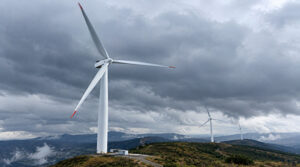
Wind turbines are a crucial part of modern renewable energy technology. Their efficient operation relies on the coordinated work of many precision components. Understanding the composition and functions of these wind turbines’ components is essential for a deep grasp of how wind power generation works.
1. Foundation
The foundation is the base of a wind turbine. It is firmly connected to the ground and provides stability for the entire turbine. It supports the turbine and the forces it experiences, including wind forces and the stresses generated by the turbine’s rotation. The construction of the foundation varies depending on the location of the turbine, whether it is on land or at sea. There are various fixed or floating methods for offshore foundations.
2. Tower
The tower is the tall, tubular pillar that supports the blades. It lifts the blades to a sufficient height so that they can rotate and capture enough wind energy to generate renewable power. The tower can reach heights of 100 feet or more and is usually made of steel, although wood is also used in some cases. The height is generally similar to the diameter of the circle formed by the rotating blades. Inside the tower, some cables connect the nacelle to the ground transformer.
3. Rotor
The rotor, consisting of three blades and a hub, captures wind kinetic energy and converts it into rotational energy. The blades, resembling giant propellers, are connected to the tower via the hub, which links to the internal components that generate electricity. The rotor typically faces the prevailing wind. The blades are designed to maximize energy capture while minimizing drag and turbulence, and are often made of fiberglass, carbon fiber, etc. The blade pitch control system adjusts the blade angle to optimize performance in varying wind conditions.
4. Nacelle
The nacelle is located at the top of the tower and can rotate around its axis according to the wind direction. It is the core component of the wind turbine. Inside it are key mechanical parts such as the gearbox and generator. It also contains various sensors and control systems. These are used to monitor the performance of the generator and adjust its operation accordingly to protect the sensitive components from harsh outdoor conditions.
5. Generator
The generator is connected to the rotor and converts the mechanical energy of the rotating motion into electrical energy. Based on the principles of electromagnetism, it uses magnets and coils to produce an electric current. There are different types, such as permanent magnet generators and induction generators. Permanent magnet generators are more efficient and require less maintenance, but they are more expensive.
6. Control System
The control system is in charge of monitoring and regulating the entire operation of the wind turbine. It is made up of hardware and software components. It can adjust variables such as blade pitch and yaw to optimize energy capture under different wind conditions and ensure the safe and efficient operation of the generator.
7. Yaw System
The yaw system adjusts the rotor blades of the wind turbine to align with the wind direction. It includes electric yaw drives that can rotate the entire nacelle and rotor assembly around a vertical axis. This allows for a quick and accurate response to changes in wind direction. It is worth noting that most vertical-axis wind turbines do not need a yaw system. However, in certain cases, some designs similar to yaw functions may be used to improve performance.
8. Transmission System
The transmission system consists of the low-speed shaft, bearings, couplings, gearbox, high-speed shaft, and brakes. Its function is to increase the rotational speed generated by the blades to the level required for the magnets or conductors in the generator to produce electricity. It also transfers the torque from the rotor to the generator. Meanwhile, the braking system ensures that the rotor does not rotate too fast, especially in bad weather or other emergencies.
9. Power Transmission System
The power transmission system sends the electricity generated by the generator to the power grid. Alternatively, it can transform the current through a transformer so that it can be transmitted over long distances through power lines. Additional transformers near residential areas using the generated electricity will convert the power again to a suitable voltage for its destination.
10. Anemometer and Wind Vane
The anemometer and wind vane are two small devices. The anemometer collects wind speed data, while the wind vane detects the wind direction. This data is crucial for the controller. Based on this data, the controller adjusts the operation of the wind turbine. This ensures that the turbine always maintains the best alignment with the wind direction to maximize the use of wind energy.
Summary
Each part of the wind turbine plays a vital role. From the stable foundation to the flexible yaw system, from the energy-converting generator to the precise wind speed and direction monitoring devices, they form an efficient and complex power generation system. The optimized design and coordinated operation of these components improve wind energy utilization. They also show human wisdom and innovation in sustainable energy development.